








Rocket League on Browser




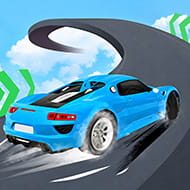

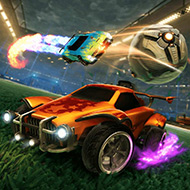
Why does a game about cars hitting a giant ball feel so hard after the first kickoff? Rocket League on Browser answers that quickly: the driving is easy, but reading the ball, managing boost and knowing where to stand are skills that take far longer to learn. Every match lasts five minutes, every goal can swing the result, and every missed touch shows up instantly on the scoreboard.
Kickoffs, Boost Pads and Basic Touches
Every match starts with a kickoff, and it sets the tone of the game. Both teams race toward the ball in the center, and whoever hits it first and cleanest takes control. A flip just before contact adds power, while a late or weak touch sends the ball rolling toward your own net. Practicing kickoffs alone is one of the most efficient ways to improve.
Boost is the resource everything depends on. Small pads scattered around the field give a little, while the large orange pads in the corners and at midfield fill your meter completely.
Beginners usually drive straight for the big pads and leave their positions empty. Better players collect small pads along their natural path and only grab a corner pad when it fits their rotation. Running dry in the middle of a play is a classic mistake, and it leaves you crawling back while the opponent shoots on an open goal.
Rotation in Rocket League on Browser
Rotation is the word you will hear most from experienced players. The idea is simple: one player challenges the ball, a second waits to follow up, and a third stays back as the last defender. After each touch, players cycle through these roles instead of everyone chasing the ball together.
Ball chasing is the most common problem in casual matches. Three cars converge on one ball, collide with each other and leave an empty goal behind them.
Fixing this does not require great mechanics. Watching your teammates and backing off when someone is already on the ball solves most of it. Team players who enjoy coordination will find rotation the most rewarding part of the game, because good positioning creates goals even when nobody pulls off anything flashy. The rule of thumb is to rotate back on the far side of the field, away from where the ball is heading.
Aerials, Flips and Mechanics Players Chase
Aerials are the first big mechanic most people try to learn. You jump, tilt the nose of your car toward the ball and hold boost to fly. Early aerials are slow and wobbly, but even a basic one lets you reach crosses and clear high balls that ground players cannot touch.
Half-flips solve a problem every beginner has: turning around quickly. By flipping backward and cancelling the flip, you spin your car to face the other way in a fraction of the time a normal turn takes.
Speed flips, air dribbles and flip resets are the advanced tricks players chase after the basics are solid. They look spectacular in highlight clips, but most matches are still won by clean saves, smart rotation and well-timed challenges. Mechanical players who love practicing the same move for hours will find almost endless depth here.
Defense, Saves and Shadowing
Good defense starts long before the ball reaches your net. Shadow defense means driving backward toward your goal while staying between the attacker and the net, matching their speed instead of diving at them. It gives the attacker time to make a mistake and gives your teammates time to rotate back.
Diving in too early is the most common defensive error. If you commit and miss, the attacker has an open path to goal.
When you do need to make a save, aim to clear toward the side walls rather than straight up the middle, where an opponent can easily pick up the rebound. Reading the bounce off the back wall is another skill that separates solid defenders from panicked ones, because shots that miss high often come back straight into the danger zone.
Game Modes and What Players Argue About
Beyond standard soccer, the series is known for its playful modes. Hoops swaps the goal for a raised basket, Snow Day replaces the ball with a hockey puck on ice, Rumble adds random power-ups, and Dropshot has teams breaking tiles in the opponent’s floor. Each mode rewards different skills, and switching between them is a good way to break a losing streak.
Not everything is loved. Quick chat spam, especially a sarcastic “What a save!” after a missed shot, has become a running joke and a genuine annoyance in the community.
Players also debate how much mechanics matter compared with positioning. Some insist that flashy plays are the only way to climb, while others point out that consistent rotation beats flashy trick shots every time at casual levels. The truth sits in the middle, and the browser setting makes it easy to test both approaches across a handful of short matches.
Common Questions
How do I stop ball chasing in Rocket League on Browser?
Check where your teammates are before you go for the ball. If someone is already challenging, rotate back toward your goal on the far side of the field and wait for the follow-up touch instead of colliding with them.
How do I learn aerials faster?
Start with low balls just above your car. Jump, tilt the nose up slightly and tap boost rather than holding it, then gradually aim for higher touches as your control improves. Consistent short sessions work better than long ones.
What happens if the score is tied after five minutes?
The match goes to overtime, where the next goal wins. Kickoffs become extremely important here, so practice a fast, clean kickoff with a flip just before contact.
Rocket League on Browser rewards patience as much as speed: grab small boost pads on your way back, rotate instead of chasing, and the day your first aerial meets a cross right in front of the goal, the five-minute clock will feel far too short.
Player Comments
There are no reviews yet. Be the first one to write one.