



Every GTA Game Compared
Back in 1997, Grand Theft Auto was a small overhead-view game where you stole cars and chased a score. Close to thirty years on, the brand stands among the largest in entertainment, with the series sell-in approaching 475 million units. Each numbered game moved the formula forward, and tracing those steps shows how the open-world crime genre took shape. Below is every main entry in release order, what set it apart and what it added to the games before it.
- Overhead view: Grand Theft Auto (1997) and Grand Theft Auto 2 (1999)
- Early 3D: Grand Theft Auto III (2001), Vice City (2002), San Andreas (2004)
- High definition: Grand Theft Auto IV (2008) and Grand Theft Auto V (2013)
- Coming next: Grand Theft Auto VI (2026)
Three Separate Timelines
Fans group the games into three unconnected continuities. The 2D timeline holds the first two games and their add-ons. The 3D timeline opens with Grand Theft Auto III and takes in Vice City, San Andreas and the handheld spin-offs. The HD timeline begins with Grand Theft Auto IV and carries on in Grand Theft Auto V. Company names, locations and the occasional minor face recur between them, yet the plots never cross. That is why the Liberty City or Los Santos of one game can look nothing like the version in another.
Grand Theft Auto (1997)
The first game viewed the action from above and spread it over three cities: Liberty City, San Andreas and Vice City, stand-ins for New York, San Francisco and Miami. Points came from jobs handed out over ringing payphones, from car theft and from general mayhem, and each of the six levels ended only once you hit its points goal. A multiplier grew while you survived, a small stock of lives made deaths painful, and causing trouble raised a wanted level that sent the cops after you.
What it brought: the founding concept. A city open in every direction, any car up for grabs, crime bosses handing out work and police responding to what you did. Development began as a cop-chase game named Race’n’Chase, and putting the player on the criminals’ side is what made it special.
Grand Theft Auto 2 (1999)
The follow-up stayed overhead but traded three cities for one retro-futuristic sprawl, Anywhere City, divided into three districts. Its signature feature was gang respect: every district had competing crews, and taking jobs from one turned its rivals against you. Street life got busier too, with gangsters trading fire with police and muggers working the sidewalks.
What it added: a health bar, saving partway through a level, garage upgrades for cars and side work such as driving a cab. Respect made the choice of who you work for matter for the first time in the series.
Grand Theft Auto III (2001)
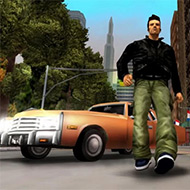
This is the release that reshaped the whole industry. It took the series into full 3D, with a Liberty City you could roam at street level. Claude, a mute lead left for dead by his girlfriend in the middle of a robbery, climbs through the Mafia, the Triads, the Yakuza and other outfits across three islands that open up as the plot advances.
What it added: nearly everything we now take for granted. Movie-style cutscenes, a plot delivered through missions, side jobs as a cabbie, paramedic, firefighter or vigilante, radio with talk shows, and a city that felt lived in. It took Game of the Year at the Game Developers Choice Awards and topped US sales charts for 2001.
Grand Theft Auto: Vice City (2002)
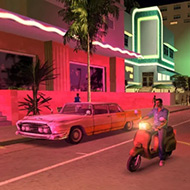
A mere year later, Vice City carried that engine to a 1986 version of Miami. Tommy Vercetti, played by Ray Liotta, was the first lead in the series with plenty to say and a big personality. Neon streets, an ’80s soundtrack and a mob-movie mood made it one of the coolest-looking games of its time.
What it added: a fully voiced hero with his own arc, properties and businesses that paid out income, motorbikes and a much larger music library. Selling 1.4 million copies in two days, it briefly held the record as the fastest-selling game ever.
Grand Theft Auto: San Andreas (2004)
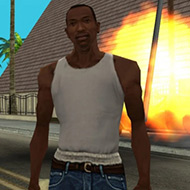
San Andreas grew the playground from one city into a whole state: Los Santos, San Fierro, Las Venturas and the rural land in between. In 1992, Carl “CJ” Johnson comes back to Los Santos for his mother’s funeral and gets dragged back into the street life he left.
What it added: role-playing progression, where stamina, muscle and fat shifted with food and workouts and gun and driving skills rose with practice, plus turf wars, swimming, over 180 vehicles and a map bigger than anything before it. It ended up as the top-selling game on PlayStation 2.
Grand Theft Auto IV (2008)
Grand Theft Auto IV launched the HD timeline with a rebuilt Liberty City and a grittier mood. Niko Bellic, a veteran of a war in Eastern Europe, comes to America chasing a fresh start and the man who sold out his unit long ago.
What it added: a new engine using Euphoria physics, so bodies reacted believably to every hit, cover-based shooting, a cell phone for contacts and activities, friends and dates, and multiplayer for as many as 32 people on PC. Two episodes, The Lost and Damned and The Ballad of Gay Tony, brought new leads and stories. The console versions hold a Metacritic score of 98.
Grand Theft Auto V (2013)
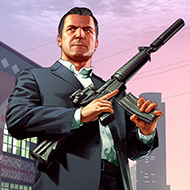
Grand Theft Auto V went back to San Andreas with a fresh Los Santos and the rural sprawl of Blaine County. Its trademark is a trio of leads, Michael, Franklin and Trevor, and you can jump between them whenever you are outside a mission.
What it added: switching between three linked storylines, heists in several stages with approaches and crew picks, special abilities, eight skills for each character, a vast map that reaches down to the seabed, and GTA Online, which became one of the longest-running multiplayer worlds anywhere. It took in $1 billion within three days, and its sell-in has passed 230 million units. Its editions across three console generations and PC are listed in Release History and Platforms.
Grand Theft Auto VI (2026)
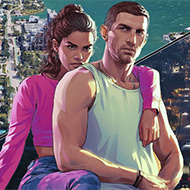
The next entry is scheduled for November 19, 2026, on PlayStation 5 and Xbox Series X|S. Rockstar has confirmed Leonida, its version of Florida, as the setting, a modern Vice City as its heart and a pair of leads, Jason Duval and Lucia Caminos. Anything else is still under wraps.
Side Games and Add-Ons
Add-on for the first game, set in an invented late-1960s London.
Prequel to GTA III taking place in 1998, launched on PSP.
Prequel to Vice City taking place in 1984, launched on PSP.
Overhead-view Nintendo DS title in the Liberty City of GTA IV.
In 2021, the Trilogy – The Definitive Edition brought remastered GTA III, Vice City and San Andreas to current platforms.
Every Main Game in One Table
| Game | Year | Where | Lead | Big step forward |
|---|---|---|---|---|
| Grand Theft Auto | 1997 | Liberty City, San Andreas, Vice City | Pick-your-own criminal | Open crime playground |
| GTA 2 | 1999 | Anywhere City | Claude Speed (intro) | Gang respect |
| GTA III | 2001 | Liberty City | Claude | Fully 3D city |
| Vice City | 2002 | Vice City, 1986 | Tommy Vercetti | Talking hero, owned businesses |
| San Andreas | 2004 | San Andreas, 1992 | Carl Johnson | Stats, skills, a full state |
| GTA IV | 2008 | Liberty City | Niko Bellic | Lifelike physics, cover |
| GTA V | 2013 | Los Santos, Blaine County | Michael, Franklin, Trevor | Three leads, heists, GTA Online |
| GTA VI | 2026 | Leonida, Vice City | Jason and Lucia | Two leads |
Where to Start
For the fullest package, Grand Theft Auto V is the easy answer: it pairs the size of San Andreas with the realism of GTA IV and layers its own ideas on top. Vice City and San Andreas remain great for mood and nostalgia. If you are curious about the roots, the 1997 original is a fun history lesson. And to drop into Los Santos with zero setup, GTA 5 in browser on our home page gets you there fastest.